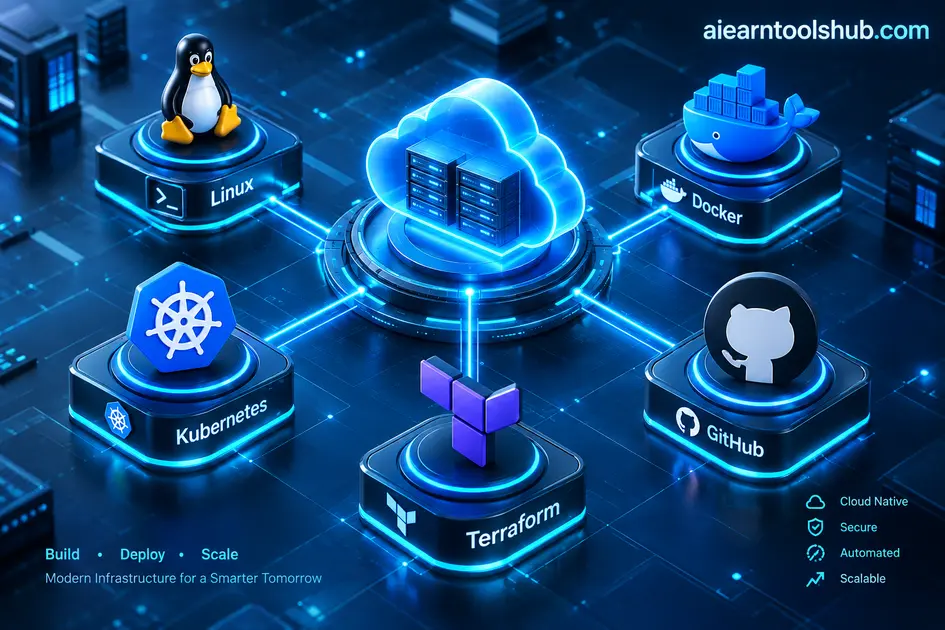
DevOps Roadmap learning can feel overwhelming when cloud technology moves so fast. Keeping up with how software gets built, tested, and deployed feels like chasing a moving target. If you want to jump into cloud engineering or sharpen your current skills, having a clear plan is essential. Modern engineering teams aren’t just looking for people who write basic scripts anymore. They want engineers who know how to design, secure, and run resilient cloud systems.
Whether you’re starting from scratch, moving over from sysadmin work, or stepping out of software development, this guide lays out the actual tech stack you need. Here is your practical, step-by-step DevOps Roadmap to mastering cloud engineering.
What Does a DevOps Engineer Actually Do?
DevOps isn’t just a single job title—it’s a mindset and working model focused on automation, continuous integration, fast feedback loops, and system reliability. Following a structured DevOps Roadmap helps you transition from basic software delivery to building automated pipelines that let code roll out smoothly.
Your day-to-day work goes far beyond spinning up virtual machines. Modern cloud engineers write Infrastructure as Code (IaC), integrate automated security scans into code checks (DevSecOps), manage container platforms at scale, and use automated monitoring tools to spot performance bottlenecks before users do.
If you’re looking for extra background on foundational cloud paths, check out our guide on Droven io DevOps Tutorials and explore our AI Tools Knowledge Hub.
Step 1 — Linux & Core OS Fundamentals in the DevOps Roadmap
Linux is the core engine behind cloud infrastructure. Almost every server running on AWS, Google Cloud, and Azure relies on Linux distros like Ubuntu, Debian, or RHEL. Mastering Linux is the foundational first phase in any complete DevOps Roadmap.
Focus on getting fluent with these fundamentals first:
- Command Line Tools: Navigating directories, handling files, filtering logs with
grep,awk, andsed, and checking performance withhtop. - System Admin Tasks: Managing users, file permissions (
chmod,chown), writing systemd services, and setting up automated cron jobs. - Shell Scripting: Writing clean Bash scripts to automate repetitive system tasks, clean up disks, or handle basic setups.
- Networking Basics: How TCP/IP, DNS, and HTTP/S work under the hood, plus SSH setups, subnets, and basic firewall rules (
ufw,iptables).
Step 2 — Version Control with Git
Version control sits at the center of every software engineering workflow. Every piece of code, Dockerfile, and infrastructure manifest needs to live in a repository where changes can be tracked, reviewed, and audited seamlessly.
Here is what you should master in this stage of your DevOps Roadmap:
- Git Core Concepts: Branching strategies, rebasing, picking commits, and fixing merge conflicts cleanly.
- Code Platforms: Working with pull requests, running code reviews, setting up protected branches, and scanning for leaked secrets on GitHub or GitLab.
- GitOps Mindset: Using your Git repository as the single source of truth for application settings and cloud setups.
Step 3 — Containerization with Docker
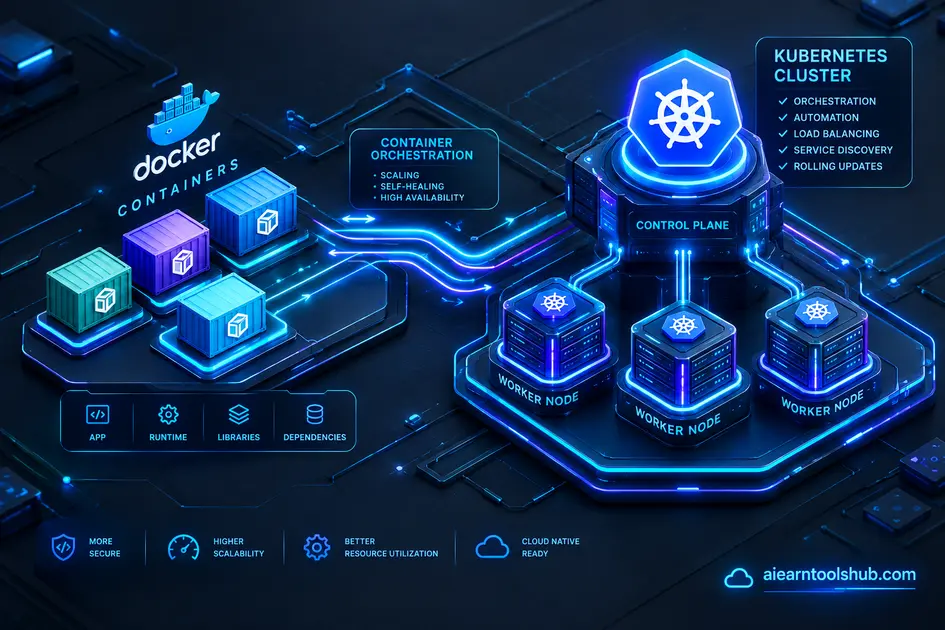
Containers solved the painful problem of apps working fine on a developer’s laptop but crashing in production. Tools like Docker bundle applications with their exact runtime dependencies into lightweight units that run anywhere consistently.
When working with containers, prioritize these essential skills:
- Clean Dockerfiles: Using multi-stage builds to keep final container images lean, fast, and secure.
- Local Orchestration: Using Docker Compose to spin up multi-container local setups (like a backend API, database, and cache) with one command.
- Image Security: Scanning your containers for known vulnerabilities using tools like Trivy before pushing them to registries.
Step 4 — Container Orchestration with Kubernetes
Running a single container on a laptop is easy. Managing hundreds of containers spread across dozens of servers requires a dedicated orchestrator. That is why Kubernetes is a vital technical milestone in your DevOps Roadmap journey—it handles auto-scaling, self-healing, load balancing, and rolling updates.
Key concepts you need to get under your belt:
- Cluster Architecture: How the Control Plane (API Server, etcd, Scheduler) communicates with Worker Nodes (Kubelet, Container Runtime).
- Core Objects: Deployments, StatefulSets, Pods, Services, and Ingress controllers for routing web traffic.
- Configuration & Secrets: Storing app settings with ConfigMaps and handling passwords safely using Secrets.
- Package Management: Packaging and deploying complex Kubernetes apps cleanly using Helm Charts.
Step 5 — CI/CD Pipelines & GitOps Integration
CI/CD pipelines automate everything that happens after code gets pushed—running unit tests, building images, and deploying to staging or production without human error. Implementing automated deployment is a key phase in this modern DevOps Roadmap.
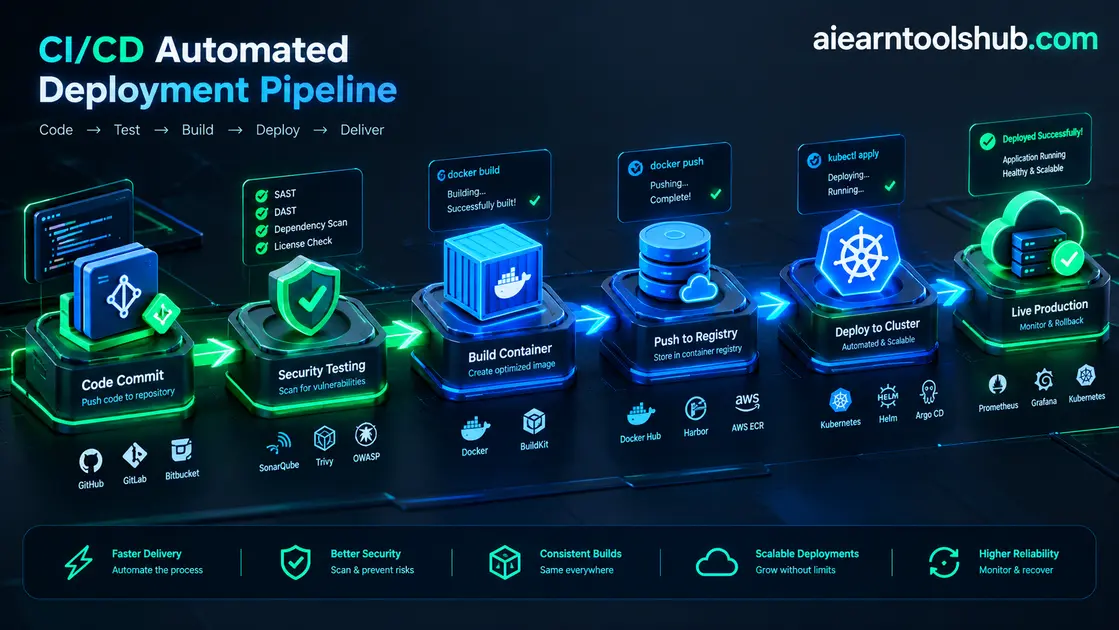
Here is a practical GitHub Actions workflow example that tests code and builds a Docker image:
name: Enterprise DevOps CI/CD Pipeline

on:
  push:
    branches: [ "main" ]

jobs:
  code-security-and-test:
    runs-on: ubuntu-latest
    steps:
      - name: Checkout Code Repository
        uses: actions/checkout@v4

      - name: Setup Node.js Environment
        uses: actions/setup-node@v4
        with:
          node-version: '20'

      - name: Install Dependencies & Run Tests
        run: |
          npm ci
          npm test

  build-and-push-image:
    needs: code-security-and-test
    runs-on: ubuntu-latest
    steps:
      - name: Checkout Code
        uses: actions/checkout@v4

      - name: Log in to Container Registry
        uses: docker/login-action@v3
        with:
          username: ${{ secrets.DOCKER_HUB_USER }}
          password: ${{ secrets.DOCKER_HUB_TOKEN }}

      - name: Build & Push Docker Image
        uses: docker/build-push-action@v5
        with:
          push: true
          tags: mycompany/cloud-app:2026-v1
Alongside traditional pipelines, GitOps operators like ArgoCD and FluxCD are standard practice today. They monitor your Git repository and automatically update your Kubernetes cluster whenever configurations change, preventing configuration drift.
Step 6 — Infrastructure as Code (IaC) in the DevOps Roadmap
Setting up servers manually in a web console leads to mistakes and untracked changes. Infrastructure as Code lets you write down your entire cloud infrastructure in configuration files that can be reviewed and deployed automatically.
- Resource Provisioning: Learn HashiCorp Terraform or OpenTofu to create servers, networks, and storage across cloud platforms.
- Configuration Management: Use Ansible to handle software installation, server updates, and hardening after servers launch.
- Best Practices: Store state files securely using remote locking (like AWS S3 + DynamoDB) and write reusable Terraform modules.
Step 7 — Cloud Platforms, Observability & DevSecOps

To complete your technical toolkit on this DevOps Roadmap, you need real-world experience with cloud hosting providers, monitoring tools, and pipeline security.
1. Pick One Cloud Provider First
Focus on mastering one platform before worrying about multi-cloud setups:
- AWS: Focus on EC2, S3, IAM, VPCs, EKS, and Lambda.
- Google Cloud (GCP): Focus on Compute Engine, GKE, Cloud Storage, and IAM.
- Microsoft Azure: Focus on Azure VMs, AKS, Blob Storage, and Entra ID.
2. Observability & Logging
When things break, you need quick answers. Observability is about gathering data to understand system health:
- Metrics: Scrape and store operational data using Prometheus, and build readable visual dashboards with Grafana.
- Log Aggregation: Centralize server and container logs with Grafana Loki or the Elastic (ELK) stack.
- Tracing: Track how API requests flow across distributed services using OpenTelemetry.
3. DevSecOps
Security checks shouldn’t happen right before release—they need to be baked into every code commit. Set up automated security checks (SAST), scan dependencies for open vulnerabilities, and test APIs as part of your CI pipeline.
DevOps Roadmap Tool Stack Overview
| Category | Core Tools | What You Use It For |
|---|---|---|
| Source Control & CI/CD | Git, GitHub Actions, GitLab CI, ArgoCD | Managing code, automating builds, syncing GitOps clusters |
| Containers | Docker, Podman, Containerd | Packaging apps and dependencies into portable, isolated containers |
| Orchestration | Kubernetes, Helm, Istio | Managing container scaling, health checks, and service networking |
| Infrastructure as Code | Terraform, OpenTofu, Ansible | Provisioning cloud infrastructure and configuring servers via code |
| Observability | Prometheus, Grafana, OpenTelemetry | Tracking system health, collecting logs, and setting up alerting |
| Cloud Platforms | AWS, Google Cloud (GCP), Azure | Hosting cloud servers, networking, managed databases, and storage |
DevOps Roles & Salary Trends
Following this comprehensive DevOps Roadmap prepares you for several high-demand positions across software and cloud engineering teams:
- DevOps Engineer: $115,000 – $165,000 / year
- Cloud Infrastructure Architect: $130,000 – $185,000 / year
- Site Reliability Engineer (SRE): $125,000 – $175,000 / year
- Platform Engineer: $120,000 – $170,000 / year
- DevSecOps Specialist: $125,000 – $170,000 / year
Frequently Asked Questions About the DevOps Roadmap
Do I need a computer science degree to land a DevOps job?
No. Most tech companies prioritize hands-on skills, real projects hosted on GitHub, practical knowledge of cloud environments, and recognized industry certifications over a traditional CS degree.
How long does it take to complete this DevOps Roadmap from scratch?
If you’re starting from scratch and studying 12 to 15 hours a week, expect it to take around 6 to 9 months to get job-ready. If you already have a background in software development or sysadmin work, you can usually make the shift in 3 to 5 months.
Which cloud platform should I learn first on the DevOps Roadmap?
AWS is still the most widely used cloud provider, making it a great starting point. The skills you build on AWS—like networking, IAM roles, and cloud storage—translate easily to Google Cloud or Azure later on.
What’s the main difference between DevOps and Platform Engineering?
DevOps focuses on practices and cultural shifts to speed up software delivery. Platform Engineering takes those concepts a step further by building self-service Internal Developer Platforms (IDPs) so developers can deploy and manage their own app environments without waiting on ops teams.
Wrapping Up Your DevOps Roadmap Journey
Building a career in cloud engineering requires continuous learning, but it’s one of the most rewarding and stable fields in tech. Take this DevOps Roadmap one step at a time: start by getting comfortable in Linux, build automated CI/CD pipelines, learn how containers work, and gradually move into infrastructure automation and cloud orchestration.
Focus on building real, working projects you can show off in your portfolio, and you’ll be well prepared to land a great role in cloud engineering.