If you already have a website—or you’re planning to build one—you may be wondering how to turn your traffic, content, skills, or audience into revenue.
Last checked: October 2026
The good news is that learning how to make money from a website does not require selling physical products.
Depending on your niche and audience, you can earn through display advertising, affiliate marketing, digital products, services, memberships, sponsorships, online courses, lead generation, and other scalable business models.
But there is an important reality to understand first: a website does not automatically make money just because it receives visitors. You need a useful audience, something valuable to offer, and a clear path from a visitor to a revenue-generating action.
In this guide, we will look at 12 practical ways to make money from a website, explain how each model works, what type of website it suits, and how to decide where to start.
Can You Really Make Money From a Website?
Yes. Websites can generate reliable revenue in several different ways, including advertising, affiliate commissions, product sales, subscriptions, professional services, sponsorships, and lead generation.
However, the exact amount you earn when you make money from a website depends on factors such as your niche, traffic quality, audience location, visitor intent, conversion rate, business model, and the value of the product or service being promoted.
That means there is no universal traffic number at which a site suddenly becomes profitable. A smaller website serving a highly targeted audience can sometimes have a better business model than a much larger site with visitors who have little commercial intent.
The key idea is simple: don’t focus only on getting more visitors. Focus on attracting the right visitors and giving them a useful reason to take the next step.
How Does Website Monetization Work?
Website monetization works by turning attention and trust into a paid action, such as a click, a sale, a booking or a subscription. In short, you make money from a website when a visitor does something that a business values.
The list below shows the main ways that happens.
Most website businesses use one or more of these basic revenue models:
- Attention: You earn by displaying advertising to an audience.
- Recommendations: You earn commissions when readers purchase through affiliate links.
- Products: You sell physical or digital products.
- Expertise: You sell services, consulting, coaching, or courses.
- Access: You charge for premium content, tools, or communities.
- Leads: You connect potential customers with local or national businesses.
- Audience: You monetize an email list, podcast, video channel, or other owned platform.
The best model depends on what your website is about and what your visitors actually want.
What Are the 12 Proven Strategies to Make Money From a Website?
There are 12 proven strategies to make money from a website, from display advertising and affiliate marketing to digital products, services and memberships. Most sites start with one or two of them, and add more only after the first ones are working.
1. Display Advertising
Display advertising is one of the simplest website monetization models. You place advertising on your pages through an ad network, and the network serves ads to visitors.
Revenue can depend on impressions, clicks, advertiser demand, audience location, seasonality, and the type of content on your site.
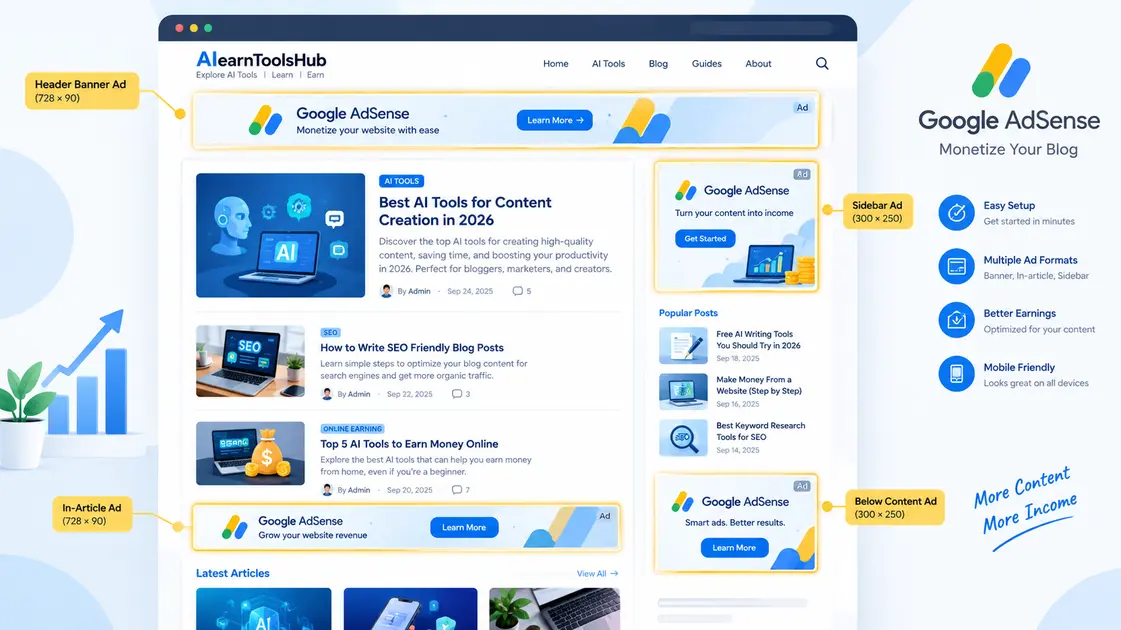
Google AdSense is an accessible starting option for publishers, while larger or more established publishers may consider managed ad platforms like Mediavine or Raptive once they meet those networks’ traffic requirements.
Best suited to:
- Blogs
- News and information websites
- How-to websites
- Educational content sites
- Large content libraries
Important: Don’t fill a page with ads simply because you can. Excessive advertising can make content harder to use and distract visitors from the information they came to find. If your site is small, prioritize building useful content and an audience before trying to maximize ad placements.
2. Affiliate Marketing
Affiliate marketing allows you to earn a commission by recommending products or services through tracked links.
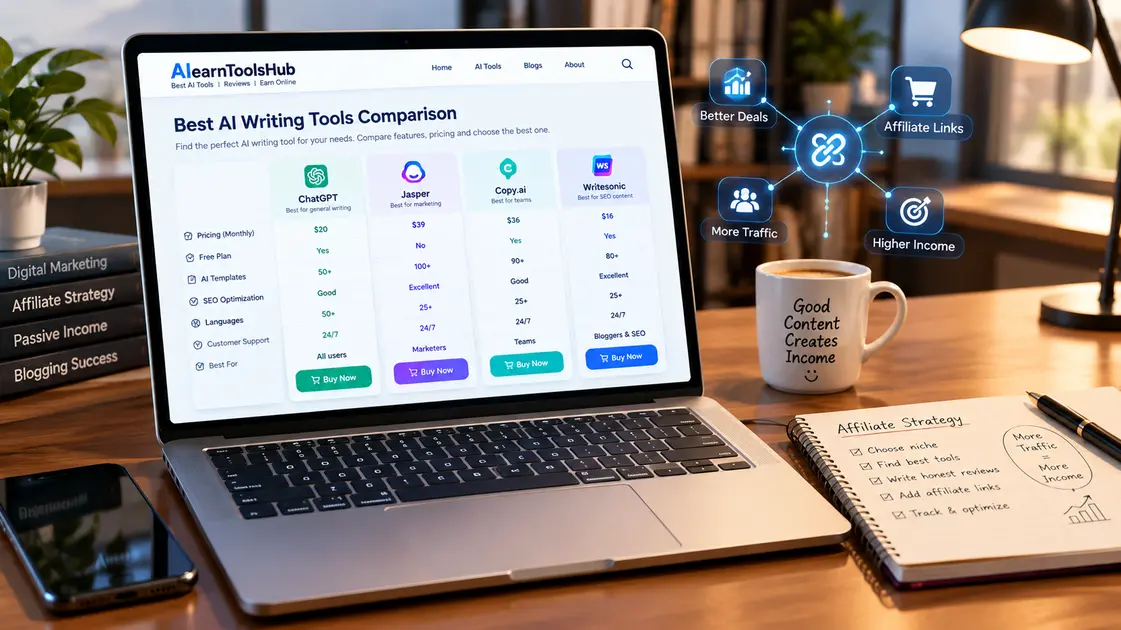
For example, an AI tools website could publish a detailed comparison of several writing platforms. If a reader chooses a paid service through an affiliate link and the program provides a commission for that qualifying action, the website earns revenue. If you want to learn more about setting up these structures,
Useful affiliate content includes:
- Product comparisons
- Hands-on tutorials
- Alternatives to popular tools
- Feature comparisons
- Use-case guides
- Buying guides
- Pros and cons lists
- Pricing breakdowns
Best suited to: Review sites, technology blogs, niche websites, comparison websites, and tutorial websites.
If you use affiliate links, clearly disclose your relationship with the retailer or service provider.
The FTC mandates in its official FTC Endorsement Guides that affiliate relationships be disclosed clearly and conspicuously so readers understand the financial connection.
3. Sell Digital Products
Digital products can turn your knowledge or original work into something visitors can purchase directly from your site.

Examples include:
- eBooks and PDF guides
- Templates (such as Notion templates or design assets)
- Spreadsheets and prompt packs
- Educational resources
- Original software or tools
The major advantage is that a digital product can usually be delivered automatically online without physical inventory or shipping costs.
To explore this strategy further, see our step-by-step tutorial on how to create and sell digital downloads.
Best suited to: Educational websites, specialist blogs, creators, designers, marketers, developers, and niche publishers.
4. Sell Online Courses or Workshops
If your website demonstrates genuine knowledge in a specific subject, you can package that knowledge into an online course or workshop.
A course might teach:
- How to use a particular software tool
- Graphic design or video editing
- Programming or SEO fundamentals
- Photography
- Business skills and AI workflows
A strong course should solve a defined problem rather than simply contain a large collection of videos.
Look at the questions your existing audience asks—those questions can help you identify a topic people are willing to pay for.
5. Offer Freelance Services or Consulting
You don’t need hundreds of thousands of visitors to make money from a website. A smaller site can generate substantial revenue by attracting clients who need a specific service.

For example, a freelancer can offer:
- Graphic design or web development
- SEO services or content writing
- Video editing or AI automation services
- Consulting and technical support
Your website functions as a portfolio and lead-generation channel at the same time.
Key elements to include:
- A clear services page
- Portfolio examples and case studies showing real results
- A functional contact form and clear call-to-action
- Information about your process and frequently asked questions
Why this model works with less traffic: A single qualified consulting client can be worth significantly more than hundreds of thousands of ad impressions.
6. Build a Membership or Subscription Website
A membership website charges users for ongoing access to premium content, tools, resources, or a community.
Depending on the niche, a membership could include:
- Premium articles and research reports
- Private tutorials and downloadable resources
- Exclusive tools and community access
- Live sessions and members-only newsletters
The biggest challenge is consistently providing enough value for members to continue paying month after month.
Before launching, identify what members will receive every month that justifies the subscription.
7. Publish Sponsored Content
Brands may pay relevant websites to publish sponsored articles, product features, reviews, interviews, or other promotional content.
This model works best when your website has a clearly defined audience that overlaps with the brand’s target customers.
However, sponsored content should not turn your website into a collection of disguised advertisements. Always ensure the product fits your audience and that commercial relationships are clearly disclosed to maintain credibility.
8. Sell Physical Products or Run an Online Store
Your website can function as a traditional e-commerce business selling:
- Original physical products
- Branded merchandise
- Print-on-demand items
- Handmade specialty products
- Digital and physical product bundles
For beginners, focus on finding a product that solves a real problem and understanding your unit margins, shipping costs, payment processing fees, and returns policy.
9. Generate Leads for Local Businesses
A website can generate revenue without selling anything directly to the person who visits it through lead generation.
Suppose you build a local website around a service such as plumbing, home cleaning, landscaping, or legal services. Visitors contact a business through your site, and you charge the service provider for qualified leads under an agreed arrangement.
When creating local content, follow Google’s Search Essentials guidelines by building helpful, human-first content rather than producing thin pages designed solely to manipulate local search rankings.
10. Monetize an Email Newsletter
An email newsletter can become a powerful direct revenue channel connected to your website.
You can use an email list to:
- Promote your own products and services
- Recommend relevant affiliate products
- Drive readers to high-value articles
- Offer premium paid newsletter subscriptions
- Partner with sponsors
If you are new to list building, read our guide on how to build an email list from scratch to turn casual site traffic into subscribers.
11. Build a YouTube Channel, Podcast, or Media Hub Around Your Website
Your website does not have to exist in isolation. It can support a YouTube channel, podcast, or social media presence by serving as a central hub for detailed information and resources.
For example, you can:
- Publish written versions of video tutorials
- Create detailed show notes for podcast episodes
- Offer downloadable context and resources
- Collect email signups from external video/audio traffic
12. Build and Sell a Website
Another business model is creating and growing a website with the intention of selling (flipping) it.
A website becomes attractive to prospective buyers when it demonstrates consistent traffic, reliable revenue, documented operations, and transferable assets.
Once established, publishers often list their properties on digital asset platforms or through specialized website marketplaces. If this route interests you, review our strategic breakdown on how to value and flip content websites.
Which Website Monetization Method Should You Choose?
Choose the monetization method that fits your audience, your traffic and the skills you already have. Beginners with little traffic usually make money from a website fastest through services or affiliate marketing, while larger sites can add display ads and sponsorships.
The table below matches common situations to the models worth trying first.
There is no single monetization strategy that works for every website. Match the revenue model to your audience, traffic level, and core strengths:
| Website Situation | Models Worth Considering | Primary Requirement |
|---|---|---|
| New content website | Affiliate marketing, services, digital products | Useful content and a defined audience |
| Growing content website | Affiliate marketing, display ads, sponsorships, email | Consistent, relevant organic traffic |
| Expert-focused website | Consulting, services, courses, digital products | Demonstrable expertise and trust |
| Community-focused website | Memberships, subscriptions, sponsorships | Recurring, exclusive value for members |
| Product-focused website | Ecommerce, digital products, affiliate recommendations | Strong product-market fit |
| Local website | Lead generation, services, regional advertising | Targeted local search demand |
How Much Traffic Do You Need to Make Money From a Website?
You do not need a fixed amount of traffic to make money from a website. A small, targeted audience can earn from services or affiliate sales, while a site that relies on display ads alone usually needs far more visitors.
What matters most is visitor intent, not visitor numbers alone.
There is no universal traffic target you must hit to earn revenue.
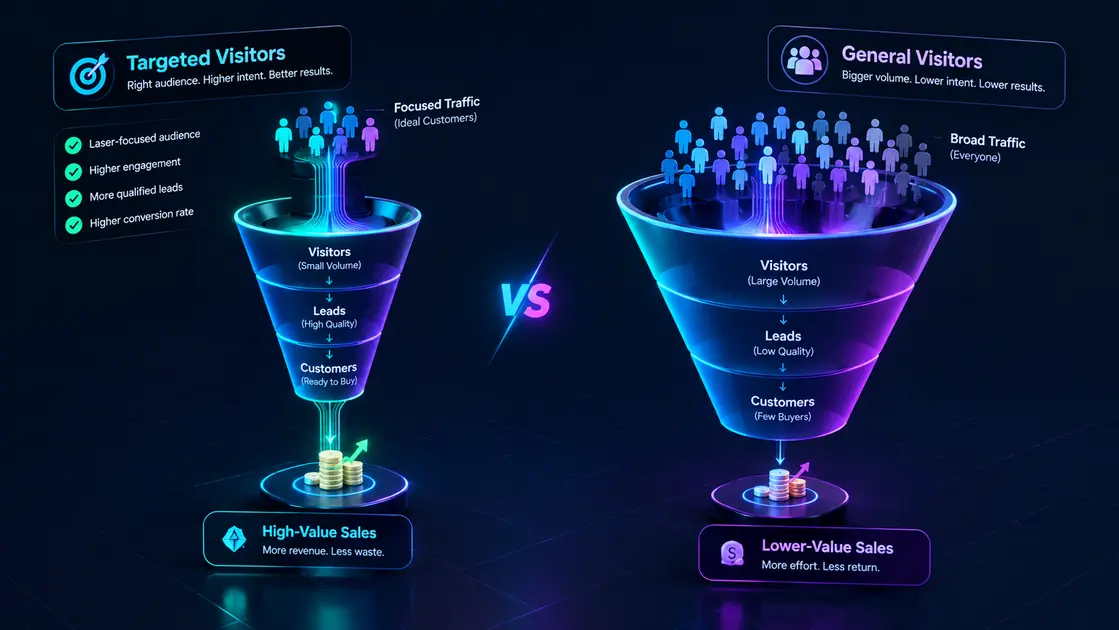
A website with a small but highly targeted audience can generate significant income through services, consulting, affiliate sales, or high-value products.
Conversely, a general-interest content site relying purely on display ads may need tens of thousands of monthly visitors before generating meaningful revenue.
Instead of asking only, “How many visitors do I need?” evaluate:
- Who are my visitors, and what specific problem are they trying to solve?
- What relevant products or services are they already inclined to buy?
- How much value can I provide before asking for a purchase or click?
How Can Beginners Start Making Money From a Website?
To make money from a website as a beginner, choose one clear audience, publish helpful content and pick just one monetization method to begin with. That focus is what turns a new site into its first sale, client or commission.
The steps below show the order that works best.
If your website is new, trying all 12 strategies at once will dilute your focus. Instead, follow this structured approach:
- Choose a Clear Audience: Target a specific niche rather than a broad, generic topic.
- Publish Useful Content: Answer real questions thoroughly.
- Build Relevant Traffic: Focus on sustainable channels like search, email, and referral networks.
- Select One Primary Monetization Model: Master one stream (e.g., affiliate links or services) before adding others.
- Track Key Metrics: Monitor conversion rates, affiliate link clicks, and email signups—not just raw pageviews.
- Optimize Before Expanding: Double down on what works before adding unnecessary complexity.
Common Mistakes That Prevent Websites From Making Money
Most websites fail to earn not because the idea is wrong, but because of a few repeatable mistakes, such as expecting fast passive income, overloading pages with ads and promoting irrelevant products. Fixing these basics is often the fastest way to make money from a website reliably.
- Expecting Fast Passive Income: A website requires active ongoing effort, including updating content, technical maintenance, and promotion—not a set-it-and-forget-it system.
- Creating Content Only for Search Engines: Content must help the user resolve their intent, not just rank for target keywords.
- Overloading the Site with Ads and Popups: Intrusive ad placements ruin the user experience, driving visitors away before they convert.
- Promoting Irrelevant Products: Recommending low-quality tools just for a high commission destroys audience trust.
- Ignoring User Experience: Slow page speeds and bad mobile navigation hurt both search rankings and sales conversions.
Can You Make Money From a Website Without Ads?
Yes. Display advertising is only one of many monetization options. You can easily make money from a website through affiliate marketing, digital products, physical products, professional services, courses, memberships, sponsorships, and lead generation.
In fact, niche sites selling professional services or high-ticket digital products often generate far more revenue per visitor without running a single display ad.
How long does it take to make money from a website?
For most new websites, the first income usually comes in stages rather than all at once, and the timing depends on the method you choose.
A service or consulting site can earn within a few weeks if it lands a client. A content site that relies on search traffic, affiliate sales or display ads often needs several months of steady publishing before earnings become regular.
Treat the first months as building, not failing.
A realistic way to think about it is in phases. In the first one to three months, expect to publish, learn and earn little or nothing.
Over the following months, search traffic and trust can build, and small affiliate sales, ad revenue or enquiries may start to appear. After that, growth usually comes from improving what already works, rather than from a single breakthrough.
Worked example (illustrative only — not a promise or an average): Imagine a small affiliate site that receives 10,000 visitors in a month.
If 300 of those visitors click an affiliate link and 30 of them buy, and the average commission is $20 per sale, that is 30 × $20 = $600 for that month.
Change any one number — fewer visitors, fewer clicks or a lower commission — and the result changes with it. That is why an example like this one, clearly labelled as an example, only shows the maths behind how you make money from a website.
Frequently Asked Questions
Below are short, direct answers to the questions readers ask most about how to make money from a website. Each answer sums up the fuller explanation in the sections above, so use them as a quick check before you choose your next step.
What is the easiest way to make money from a website?
Display advertising and affiliate marketing are generally the most straightforward to set up technically. However, offering freelance services or consulting often provides the fastest path to meaningful revenue if you already possess a marketable skill.
Can I make money from a website with no products?
Yes. You can monetize a website through display ads, affiliate marketing, sponsored content, lead generation, or professional services without manufacturing or stocking physical products.
How long does it take for a website to make money?
There is no fixed timeline. A service-based website can generate revenue within weeks by landing a single client, while a display ad or affiliate blog may take 6 to 12 months to build sufficient search traffic and authority.
Can a small website make money in today’s market?
Yes. Smaller websites can perform exceptionally well if they serve a specific, high-intent audience with tailored products, high-ticket affiliate offers, or specialized services.
Is affiliate marketing still worth using on a website?
Yes, provided your content offers original insights, real hands-on testing, and genuine user value. Search engines and readers both favor in-depth reviews over low-effort summaries.
Final Thoughts
In short, yes — you can make money from a website if you build useful content for a clear audience and connect it to one clear income stream. There is no shortcut, but there is a repeatable pattern, and the points below sum it up.
Learning how to make money from a website successfully comes down to one core principle: start with the audience and work backward.
Identify what problems your visitors face, what information they require, and what solutions they value enough to pay for. Once you establish that foundation, choosing and implementing the right monetization model becomes straightforward.
Focus first on building a useful platform people trust. Once you deliver real value, turning that attention into a sustainable business naturally follows.
The pattern is always the same when people successfully make money from a website: useful content, steady traffic, and one clear income stream at a time. Start today, and your future self will thank you for the month you decided to make money from a website properly.