
Best Online Earning Apps Using AI: 7 Platforms, Real Fees and Honest Pay (2026)
Last checked: 14 November 2026
The best online earning apps using AI in 2026 are Fiverr, Upwork, Canva, ChatGPT and Claude, ElevenLabs, Runway ML and Kling AI, and Amazon KDP. None of them pays you for tapping a screen — each one speeds up a real skill you sell: freelance services, design, writing, voiceover, video or publishing. Start with one, learn it properly, and expect your first payment in weeks, not hours.
Key Takeaways
- Skill first, app second: the best online earning apps using AI reward a real skill — freelancing, design, writing, voiceover, video or publishing — not apps that promise money for tapping or watching ads.
- Pick one platform first: build samples and reviews on one of the best online earning apps using AI, and expand only after it earns.
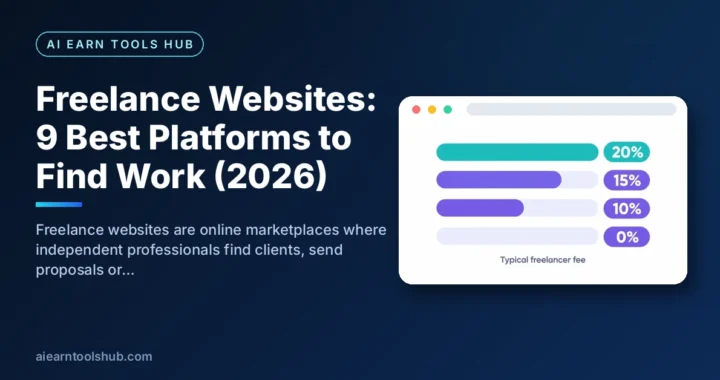
- Fees are real: Fiverr keeps 20% of every order; Upwork takes 0–15% per contract plus Connects at $0.15 each. Price your work with the fee already subtracted.
- Most platforms are free to join: never pay a fee just to join one of the best online earning apps using AI or unlock earnings — that is the first sign of a scam.
- Free tiers have limits: ElevenLabs’ free tier has no commercial license, and Runway’s free credits never refill. Read the free-tier rules before you build on them.
- Earnings grow with consistency and skill: treat the early weeks as learning time, not a guaranteed income — no platform in this guide publishes official average-earnings figures.
- ChatGPT earns nothing by itself: you earn by selling a service or content it helps you create — freelance writing is usually the fastest route to a first payment.
How This Guide Was Checked
This guide is research-based. We did not run paid hands-on trials, and this article does not claim otherwise. Platform fees and plan prices were checked on 14 November 2026 against 2026 guides that verified the official pricing and help pages: Fiverr’s 20% commission, Upwork’s 0–15% fee and $0.15 Connects, ElevenLabs’ $22 Creator plan, Runway’s $15 Standard plan, Kling’s daily free credits, and Amazon KDP’s 70% royalty band.
Earnings ranges in this guide are typical ranges reported in 2026 guides, not guarantees and not platform-published averages — no platform in this guide publishes what its average user earns. Where two checks disagreed — most notably on Kling’s exact Standard price, which third-party trackers list anywhere from about $7 to $10 a month — this guide says so instead of picking the version that sounds cleaner. Platforms change fees and rules; confirm the current numbers on the official page before you pay for anything.
What Are the Best Online Earning Apps Using AI in 2026?
Short answer: The best online earning apps using AI in 2026 are Fiverr, Upwork, Canva, ChatGPT and Claude, ElevenLabs, Runway ML and Kling AI, and Amazon KDP. Each one below is matched to a specific way of earning, so start with the best online earning apps using AI that fit a skill you already have — or want to learn first.
| App or platform | Best for | What you do or sell | Free to start? | The catch |
|---|---|---|---|---|
| Fiverr | Beginner freelancers | AI-assisted gigs such as logos, writing and video | Yes — free account | 20% commission on every order |
| Upwork | Experienced freelancers | Higher-budget client projects and AI services | Yes — free to join | 0–15% fee per contract + Connects |
| Canva | Designers and template sellers | Templates, planners and social media packs | Yes — free tier | Creators program is beta + portfolio application |
| ChatGPT and Claude | Writers and content freelancers | Articles, emails and social media content | Yes — free plans | Plus/Pro are $20/month each |
| ElevenLabs | Voiceover creators | Voiceovers, audiobooks and narration | Yes — free tier | Free tier has no commercial license |
| Runway ML and Kling AI | Video creators | AI video clips and faceless channel content | Runway: one-time trial credits; Kling: daily credits | Free output is watermarked, no commercial use |
| Amazon KDP | Authors and publishers | Ebooks, journals and low-content books | Yes — free to publish | 70% only inside the $2.99–$12.99 band |
Use this comparison to shortlist one or two of the best online earning apps using AI, then read their full sections below for how earning works on each one.
1. Fiverr — Top AI Earning App for Freelance Services
Fiverr remains one of the highest-earning platforms for freelancers — and AI has completely transformed what is possible here. Moreover, it is one of the most beginner-friendly and best online earning apps using AI available today. Work that used to take hours now takes minutes. For example, a logo that required 3 hours of design work now takes 20 minutes with Canva AI or Midjourney. Similarly, a blog post that took an hour now takes 10 minutes with a well-crafted AI prompt. As a result, your profit per gig has skyrocketed while your effort has dropped significantly.
The fee is the first thing to understand. Fiverr is free to join, but it keeps a flat 20% of every order — including extras and tips — so a $100 order pays you $80. Standard earnings clear 14 days after the order completes (7 days for eligible top sellers). Price every gig with that 20% already subtracted, or you will undercharge yourself from day one.
The top earning niches on Fiverr right now include AI logo and brand design, short-form video creation, AI voiceovers, SEO content writing, and chatbot setup for small businesses. In terms of earnings, beginners typically make $200 to $800 per month. Consistent sellers with good reviews, however, earn $1,500 to $4,000. Furthermore, advanced sellers in high-demand niches regularly clear $5,000 or more monthly. Those are typical ranges reported in 2026 guides, not promises — your first order depends on gig quality, pricing and demand, and many new sellers report landing it within a few weeks rather than days.
Getting started is simple. First, create a free account and pick one AI-powered skill you can deliver consistently. Then build two or three sample pieces and publish your first gig. If you want a head start on the freelance side, our freelance websites guide compares Fiverr with the other best online earning apps using AI.
2. Upwork — Best Online AI Earning App for High-Ticket Work
If Fiverr is where you start, Upwork — another of the best online earning apps using AI — is where serious freelancers scale. The platform attracts higher-budget clients — businesses, startups, and enterprises — who are actively searching for AI-fluent talent in 2026. Demand for AI-related skills on Upwork — one of the best online earning apps using AI — has grown dramatically. Specifically, prompt engineering, AI content strategy and chatbot building are among the fastest-growing categories on the platform today.
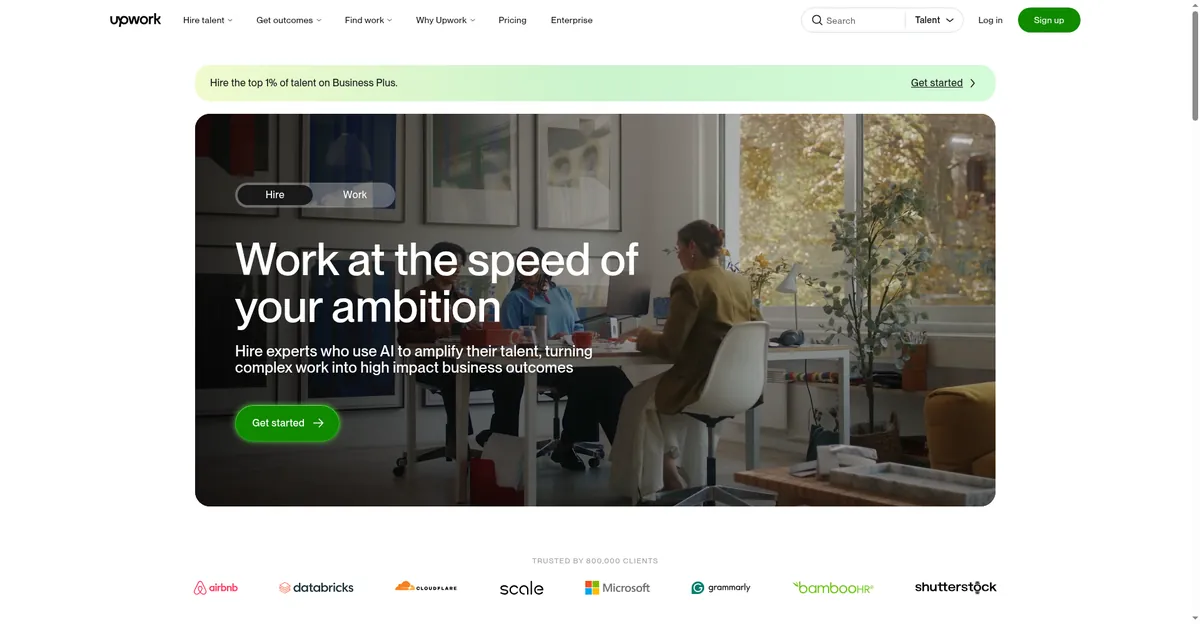
Upwork’s costs work differently from Fiverr’s. Joining is free, but bidding costs Connects at $0.15 each — typically 2–16 per proposal — and Upwork then takes a Freelancer Service Fee of 0–15% per contract, with most freelancers seeing 10%. The fee rate is shown before you apply and locked once the contract starts. Budget both before you start bidding at volume: ten proposals at 10 Connects each is $15 spent before you have won anything.
In terms of pay, entry-level freelancers earn $15 to $35 per hour. Mid-level specialists, on the other hand, earn $50 to $100. Additionally, experts with a strong portfolio regularly charge $100 to $250 per hour and beyond. Your Upwork profile is everything here. Therefore, write a specific, results-focused bio and mention the exact AI tools you have used. For instance, “Used Claude API to build a customer support chatbot that reduced response time by 60%” is far more compelling than simply saying “experienced with AI.” Our ChatGPT Upwork proposals guide shows the full 7-step method, prompts and the real Connects and fee costs.
3. Canva — AI Earning App for Selling Digital Templates
Most people use Canva to make things. Smart people, however, use it to sell things — and AI has made this approach dramatically more accessible in 2026. What sells best right now includes social media template packs for Instagram and LinkedIn, business presentation templates, resume templates, YouTube thumbnail packs, and digital planners.
There are two different ways to earn, and they are easy to confuse. Inside Canva, the Canva Creators program pays royalties when people use your templates — but it is not a shop where you set a price. Canva pays from a monthly royalty pool tied to its subscription revenue, and your share depends on how often your templates are used (each time a design made from your template is downloaded, printed or presented).
Canva does not publish what one use is worth, and the template program is in beta: you apply with a portfolio, and an answer can take a couple of months. The separate Contributors program for design elements is currently paused for new sign-ups, so templates are the open door.
Outside Canva, many creators package their templates and sell them on Etsy or Gumroad, where template packs commonly list for $15 to $97 per pack. That route pays a one-time price per sale instead of royalties, but you compete with thousands of similar listings — and Canva’s license rules decide which sales are allowed, so templates with Pro content must be sold as Canva template links, not as files.
Either way, Canva publishes no average creator earnings, so treat any monthly income figure you see for template sellers as one creator’s report, not a typical result. The free tier is enough to start; the paid tier unlocks premium templates and AI tools for scaling later.
4. ChatGPT and Claude — Best AI Apps for Content Income
You do not need to build anything technical to earn with AI language models. In fact, combining tools like ChatGPT or Claude with freelance platforms is one of the most accessible of all the best online earning apps using AI today. The most popular services people sell using AI writing tools include SEO blog articles at $30 to $200 each, email marketing sequences at $50 to $500 per project, and monthly social media content packages at $300 to $2,000 per client. Moreover, ghostwritten ebooks fetch $500 to $5,000 per project.

Both tools have free tiers that cover this work, and both sit among the best online earning apps using AI for writers — ChatGPT Plus at $20 a month, and Claude Pro at $20 a month ($17 a month billed annually). Start free and upgrade only when the free limits actually slow you down.
One important caveat, however: pure AI output gets rejected by smart clients quickly. Therefore, the freelancers earning the most use AI to accelerate their own voice — they edit, fact-check, and layer in genuine expertise on top of what the AI produces. That combination is what clients actually pay premium rates for.
Consistent content freelancers using these AI earning apps typically make $500 to $5,000 per month, depending on their niche and client base. If you are new to prompting, our guide to writing AI prompts covers the skill behind the output — and our free AI Prompt Generator builds the same kind of briefs if you want a starting point without writing one from scratch.
5. ElevenLabs — AI Earning App for Voiceover Services
ElevenLabs produces some of the most realistic AI-generated voices available today, and consequently, creators are building solid income around it. The most popular ways to earn include providing voiceover services for faceless YouTube channels, producing audiobooks for self-publishers, and creating corporate training video narration. Additionally, many freelancers deliver podcast production for clients who have great content but no recording setup.

Read the free tier’s license before you sell anything made with it. ElevenLabs’ free tier gives 10,000 credits a month — about ten minutes of audio — but it has no commercial license and requires attribution, so free-tier audio cannot legally go into a client’s YouTube video, podcast or course. Commercial use starts at the Starter plan ($6 a month), and the Creator plan at $22 a month ($18.33 billed annually) is the one most working voiceover freelancers land on, with 121,000 credits and professional voice cloning.
Freelancers offering AI voiceover services on Fiverr and Upwork — two of the best online earning apps using AI — commonly report earning $800 to $4,000 per month. That range is reported by freelancers, not published by ElevenLabs — and it assumes you are selling finished voiceover work to real clients, not just generating audio. The entry point is low, but the skill that earns is not the tool: it is pacing, pronunciation, direction and delivery on time.
6. Runway ML and Kling AI — Best Online Earning Apps for Video Creation
AI video generation has matured significantly in 2026. As a result, Runway ML and Kling AI have both become powerful tools for turning text prompts or images into professional-grade video clips — and the market for this content is enormous. People are monetizing AI video through the best online earning apps using AI in several proven ways. For instance, YouTube automation channels combine AI scripts, ElevenLabs voiceovers, and AI-generated visuals to publish faceless content that earns through ad revenue and sponsorships. In addition, freelancers sell branded AI-generated social media videos to businesses for $200 to $1,500 per clip.

The free tiers here are the weakest of any platform in this guide, and that matters for your budget. Runway’s free plan gives 125 credits once — they never refill, so it works as a trial rather than a free plan — and free videos carry a Runway watermark with no commercial use. Its Standard plan is $15 a month ($12 billed annually) for 625 credits and no watermark.
Kling is more generous: logged-in users get 66 credits every day, but free output is watermarked, capped at 720p and also has no commercial rights. Kling’s Standard plan is listed by third-party trackers at about $10 a month for 660 credits, though Kling does not publish a stable price list and trackers disagree on the exact figure — confirm it on Kling’s own page before you pay.
YouTube automation channels typically take three to six months to monetize. However, established channels in profitable niches earn $1,000 to $10,000 or more per month. The real gate is the YouTube Partner Program: ad revenue needs 1,000 subscribers plus either 4,000 valid public watch hours in 12 months or 10 million valid public Shorts views in 90 days — and from 1 February 2027, new applicants will need 8,000 watch hours or 20 million Shorts views instead.
Freelance video services, on the other hand, generate income much faster — often within the first few weeks of starting — because a client pays you directly instead of YouTube paying you after a threshold.
7. Amazon KDP — Best AI Earning App for Passive Publishing Income
Amazon Kindle Direct Publishing combined with AI writing tools has become one of the most popular passive income strategies among the best online earning apps using AI in 2026. Writers use AI to accelerate production, then publish on KDP for royalties of 35 to 70 percent per sale. What is selling well right now includes niche non-fiction guides on productivity, health, and personal finance. Moreover, low-content books like journals, planners, and activity books continue to perform strongly. Children’s books with AI-generated illustrations, furthermore, are a growing and relatively uncrowded category.
The royalty math changed in 2026, and older guides get it wrong. For ebooks you choose between a 35% option and a 70% option. The 70% option pays 70% of the list price minus a delivery cost of $0.15 per MB — and since 7 July 2026 it applies to ebooks priced from $2.99 to $12.99 on Amazon.com, up from the old $9.99 ceiling.
Outside that band, or for sales to customers outside the eligible territories, the 35% option applies. Paperbacks earn 60% of the list price minus printing costs at $9.99 and up (50% below that). KDP pays royalties monthly, about 60 days after the end of the month in which the sales happened.
Most beginners earn $100 to $500 per month initially. However, prolific publishers who research niches carefully and optimize their listings report $2,000 to $8,000 or more per month. Although it is a long game, the income is genuinely passive once your books are live and ranking. Two warnings that matter more than any tool choice: books made mainly of public-domain content are limited to the 35% royalty, and AI-generated books still need real editing, fact-checking and niche research — Amazon’s store is full of unedited AI books that never sell.
How Much Can You Realistically Earn?
Short answer: How much you earn from the best online earning apps using AI depends mainly on your hours, your niche and how consistently you deliver — not on the app alone. Your first weeks will usually sit at the low end of the ranges below while you build samples and reviews. Here is the honest answer that most guides avoid giving. If you put in one to two hours per day casually, expect $200 to $800 per month in the early stages.
Three to four hours per day with consistency, however, brings $800 to $2,500. Additionally, full-time focus of six to eight hours daily can realistically reach $2,500 to $8,000 or more. Furthermore, expert-level work with systems and scale built around AI can push well past $10,000 per month. These numbers are achievable — but they require consistency, patience, and genuine skill development alongside the AI tools. The apps are accelerators. Your effort, however, is the engine.
| Effort | Typical monthly range (reported) | What it assumes |
|---|---|---|
| 1–2 hours a day, casual | $200–$800 | Learning the tools, first samples and reviews |
| 3–4 hours a day, consistent | $800–$2,500 | Regular clients or steady sales starting |
| 6–8 hours a day, full-time | $2,500–$8,000+ | A working niche, repeat clients, good reviews |
| Expert level, with systems | $10,000+ | Scale: packages, templates or a catalog that sells |
Every range above is for work delivered through the best online earning apps using AI in this guide — no app pays for time alone, only for work a client or a reader actually pays for.
What Is a Realistic Expectation for Your First Months?
A realistic expectation is a slow start: your first pieces of work build your portfolio, your first reviews build trust, and income usually follows that proof rather than arriving on day one. Judge the best online earning apps using AI by whether your skills, samples and client responses are improving month by month — that progress is the early sign you picked the right platform.
How Can You Verify an Earning App Is Legit Before You Start?
Short answer: You can verify an earning app is legit by checking who runs it, reading how and when it pays, and looking for independent proof that real users were paid — and you should never pay a fee just to join or release your earnings. Run every platform, including the best online earning apps using AI, through this checklist before you invest serious time in it.
- Use the official listing only. Download or open the app from its official store listing or official website, and check the developer name matches the company — copycat apps are a common trap, and the best online earning apps using AI all have a clear official home.
- Read the payout terms first. Before you work, find how payment is sent, what you must reach before you can withdraw, and what fees or holds apply. If payout rules are vague, hidden or keep changing, walk away.
- Apply a payout-proof standard. Treat screenshots shown inside an app, or testimonials on its own page, as marketing — not proof. Look for independent reviews and payment records that show the platform name, a date, and money arriving in a real payment account.
- Search for complaints. Search the app’s name together with words like “not paying”, “withdrawal” and “scam”, and read recent results on sites the app does not control.
- Know the red flags. Guaranteed daily income, pressure to pay to join or unlock earnings, earning mainly by recruiting others, requests for your banking password or remote access to your phone, and no real contact details or terms are all reasons to stop.
- Test small first. Do the smallest piece of work available, try to withdraw as soon as you are eligible, and only invest more time after a payment actually reaches you.
If a platform fails two or more of these checks, move on. The best online earning apps using AI in this guide are established platforms that are free to join and pay for real work, sales or royalties — your time is better spent building skills on the best online earning apps using AI than chasing a doubtful app.
What Are the Beginner Mistakes to Avoid?
Short answer: The beginner mistakes that stall earnings are spreading across too many platforms, pricing work too low, skipping niche research, and publishing unedited AI output. Avoid those four, and the best online earning apps using AI become much easier to grow on.
- Spreading across five platforms at once and mastering none is the number one mistake new earners make. Therefore, pick one platform, build real traction, and then expand gradually.
- Pricing too low is another common mistake. Charging $5 for work that took 20 minutes sounds fine until you calculate the actual hourly rate — and on Fiverr, remember the 20% commission comes off first. Consequently, understanding your value early saves months of frustration.
- Skipping niche research, furthermore, costs people months of wasted effort. The most profitable freelancers are specialists, not generalists. For example, “AI video editor for real estate agents” earns more and converts faster than simply “video editor.”
- Submitting pure AI output without editing is a fast track to bad reviews. Always, therefore, add your own judgment, expertise, and polish on top of what the AI produces.
What Are the Expert Tips to Grow Faster?
Short answer: You grow faster by building a small portfolio first, packaging your work into fixed offers, studying what already sells in your niche, and reinvesting early earnings into better tools. Those four habits compound on the best online earning apps using AI, and each tip below explains how to apply one of them.
- Build a portfolio before you pitch anything. Specifically, create three to five strong samples of your best AI-powered work and put them somewhere clients can easily access — a Behance page, a simple website, or a well-organized Google Drive folder works perfectly.
- Productize your services instead of doing custom quotes every time. As a result, fixed packages with clear deliverables convert faster because clients know exactly what they are buying.
- Study what sells before you create anything. On Etsy, Shutterstock, and KDP, for instance, look at the bestsellers in your category and understand why they sell before producing your version.
- Reinvest in the tools that multiply your output. The free tiers are great for starting; however, the paid tiers are where serious, scalable income gets built. If you are a student, our best AI tools for students roundup covers the free tiers worth starting on.
How to Make Money With ChatGPT: 3 Beginner Methods
Short answer: There are three proven starting methods for making money with ChatGPT in this guide to the best online earning apps using AI: freelance writing, YouTube automation, and blogging with affiliate marketing. Freelance writing is usually the fastest route to a first payment, YouTube grows more slowly but can scale, and blogging builds an asset you own. Start with one method only, and give it your full effort before trying another.
Freelance Writing Using ChatGPT
Freelance writing is one of the easiest ways to make money with ChatGPT. You can use it to write blog posts and articles, create website content, draft email campaigns, and generate product descriptions. Start by offering services on platforms like Fiverr or Upwork. Always edit and personalize the content to maintain quality and originality.

Startup steps for freelance writing: pick one service first, such as blog posts for small businesses, instead of offering everything to everyone. Use ChatGPT to draft two short sample articles in that niche, then edit them heavily in your own voice. Create a simple profile on Fiverr or Upwork that describes the finished result the client receives, not the tool you use.
Offer a small, clearly defined first job so a new client can test you with low risk. Deliver early, ask for feedback, and save the client’s comments to improve your next draft. Your samples matter more than any certificate, because clients pay for writing they can publish, not for prompts. That is the practical starting point for making money with ChatGPT as a writer. Our freelance writer roadmap covers building those first portfolio pieces.
YouTube Automation with AI Tools
If you prefer video content, YouTube automation is a powerful option. ChatGPT helps you generate video ideas, write engaging scripts, and create SEO-friendly titles and descriptions. You can combine this with voiceover tools and video editors to build a faceless channel and earn through ads and sponsorships.
Startup steps for YouTube automation: choose one narrow topic you could make twenty videos about, such as study tips, history facts or product explainers. Use ChatGPT to list video ideas, then check each idea against videos already ranking on YouTube. Write one script, read it aloud, and cut anything that sounds written rather than spoken. Pair the script with a voiceover and simple visuals, keeping the opening seconds focused on the viewer’s question.
Publish consistently, then remake the videos viewers watch longest instead of guessing what to make next. Treat the first videos as practice. A channel built for making money with ChatGPT grows from testing topics and improving watch time, not from uploading once and waiting. Ad revenue needs the YouTube Partner Program — 1,000 subscribers plus 4,000 watch hours or 10 million Shorts views — so plan for months before the first payout. Our YouTube scripts with AI guide covers the scripting half of this workflow in detail.
Blogging & Affiliate Marketing
Blogging is a long-term strategy for online earning with ChatGPT. You can write SEO-optimized blog posts, research low-competition keywords, and create product reviews and guides. By promoting affiliate products, you can earn commissions and build passive income over time.
Startup steps for blogging and affiliate marketing: pick one problem-based niche, for example tools for students, home workers or small shops. Use ChatGPT to brainstorm questions people ask in that niche, then check that each topic has real search interest. Write one helpful guide yourself, using ChatGPT for the outline, examples and first draft only.
Recommend only products you have checked, and explain who each product is not right for. Update the post when prices, features or tools change, so it stays useful to readers. Blogging pays slowly at first because search engines need time to trust a new site, so judge making money with ChatGPT through blogging over months, not days.
| Method | How you earn | What to expect |
|---|---|---|
| Freelance writing | Selling writing services to clients on Fiverr or Upwork | Usually the fastest route to a first payment |
| YouTube automation | Ads and sponsorships from a faceless channel | Grows more slowly than freelancing, but can scale |
| Blogging and affiliate marketing | Affiliate commissions from product reviews and guides | A long-term strategy that pays slowly at first |
How Do You Land Your First Paid Gig With ChatGPT?
Short answer: You land your first paid gig by selling one small, specific result — not by telling clients that you “know AI”. A clear offer, two good samples and direct outreach will beat a long list of tools every time. Follow this plan in order, and do not skip the human editing step, because that is what the client is really paying for.
- Pick one buyer. Decide exactly who you help, such as local shops that need social posts or coaches who need newsletter drafts. A specific buyer makes every later step easier.
- Build two samples. Use ChatGPT to outline and draft two example pieces for that buyer, then research, fact-check and rewrite them until they sound like work you would proudly sign.
- Write a short pitch. Ask ChatGPT to help you draft a brief message that names the buyer’s problem, shows one sample, and offers one small first job with a clear deadline.
- Apply and reach out daily. Send your pitch through freelance platforms and directly to suitable businesses, and keep a simple list of who you contacted and what they said.
- Deliver a careful first job. Confirm the brief in writing, deliver on time, and check every fact and sentence yourself before sending, because early trust matters more than speed.
- Ask what comes next. Thank the client, ask for honest feedback and a testimonial if they are happy, and offer the logical follow-on piece while your work is fresh in their mind.
Illustrative example only — not a promise and not a typical result: a beginner might package four blog outlines and one drafted post for a single fixed starter price, for example $50. What matters is the pattern: one buyer, one small offer, one careful delivery.
How Can You Spot and Avoid “ChatGPT Jobs” Scams?
Short answer: A “ChatGPT job” is a scam when it asks for money, secrecy or your accounts before any real work exists. Genuine work is always clear about the task, the deliverable and how you will be paid. Walk away from any offer that shows the signs below.
- A fee to start. Being asked to pay for “training” before any work exists — walk away. Genuine work never charges you to begin.
- Guaranteed daily or weekly earnings for simply copying and pasting prompts. No real platform guarantees income.
- Requests to pay by gift card or cryptocurrency, or pressure to decide immediately.
- A vague company with no website, no real client and a job described only in chat messages.
- Being asked to receive, hold or forward money, or to use your own bank or marketplace accounts for someone else.
- An overpayment by cheque or transfer, followed by a request to send part of the money back.
Protect yourself by keeping work and payment on established platforms such as Fiverr or Upwork at the start, checking the client’s history, and never paying to unlock work. Legitimate work on the best online earning apps using AI never needs your bank login, a fee, or secrecy.
Frequently Asked Questions About the Best Online Earning Apps Using AI
Which Is the Best Online Earning App Using AI for Beginners in 2026?
Fiverr is the best starting point for most beginners. It requires no bidding, no cold outreach, and no upfront investment. Simply create a gig around one AI-powered skill — like logo design, content writing, or voiceover — and wait for buyers to find you. Remember the 20% commission when you price the gig, and expect the first order to take weeks rather than days.
Can I Earn Money Using AI Apps With Zero Experience?
Yes — but zero experience does not mean zero effort. Platforms like Fiverr and Canva have very low barriers to entry. However, you still need to learn the AI tools, understand what buyers want, and deliver consistent quality. The learning curve is short, and most people see their first earnings within a few weeks of starting seriously.
How Much Can I Realistically Earn From AI Earning Apps Per Month?
It depends entirely on your effort and consistency. Casual users putting in one to two hours daily typically earn $200 to $800 per month. Serious part-time users, however, can reach $1,500 to $4,000. Furthermore, full-time freelancers with a strong niche and client base regularly earn $5,000 or more per month using AI-powered services. These are typical ranges reported in 2026 guides, not guarantees.
Are These AI Earning Apps Free to Use?
Most platforms on this list offer a free tier to get started. Fiverr, Upwork, Canva, and Amazon KDP are all free to join. AI tools like ChatGPT and ElevenLabs also offer free tiers with limited usage, and Runway gives a one-time credit trial — but read the limits first: ElevenLabs’ free tier has no commercial license, and Runway’s free credits never refill. Therefore, you can realistically start earning with zero upfront cost and reinvest your first earnings into paid tool upgrades later.
Is Earning Money With AI Apps Sustainable Long-Term?
Absolutely — as long as you focus on adding real value rather than just automating output. The freelancers and creators building sustainable income in 2026 are those who use AI as a tool to enhance their skills, not replace them entirely. Platforms reward quality and consistency, so combining AI speed with genuine human judgment is the formula for long-term, growing income on the best online earning apps using AI.
How Can I Tell If the Best Online Earning Apps Using AI Are Legit?
Check the app’s official store listing and payout terms, look for independent proof that payments actually arrive, and walk away if it charges a joining fee, guarantees income, or pays mainly for recruiting others. The best online earning apps using AI in this guide are established platforms that are free to join — use the full verification checklist above on any new app before you trust it with your time.
Bottom Line
The best online earning apps using AI in 2026 have genuinely opened a new door for anyone willing to walk through it. The tools are accessible, the platforms are paying, and the demand for AI-powered services keeps growing every month. However, let’s be clear one final time: AI is the accelerator, not the shortcut. The people winning on these platforms combine AI speed with real effort, honest value, and consistent delivery. If you have creative skills, launch a Fiverr gig today around AI design, writing, or video — remembering the 20% commission when you price it.
If you have technical skills, build your Upwork profile around AI consulting or development. If you want passive income, start building a Canva template library or KDP catalog this week. Pick one path. Start today. The opportunity is wide open — and the best online earning apps using AI only pay when the work behind them is real. Treat them as accelerators for a skill, not as the income itself, and come back to this guide as your skills grow: a second platform is much easier once the first one is paying.
Last updated: 14 November 2026. Platform fees, plan prices and program rules change over time — if a price or step looks different on your screen, the method still applies. Confirm current fees on the official page before you pay for anything.
Sources
- Fiverr — fiverr.com (checked 14 November 2026; homepage and Help Center — 20% seller commission, free to join, 14-day clearance)
- Upwork fees for freelancers, checked against Upwork’s own help and pricing pages on 29 October 2026 — lunagig.com/blog/upwork-fees-freelancers-explained (0–15% variable service fee; $0.15 per Connect; Freelancer Plus $19.99/month with 100 Connects)
- Canva Creators program, checked against Canva’s own help pages — krea.ai/blog/can-you-make-money-with-canva-creators-program-and-etsy-templates-in-2026 (royalties from a monthly pool, pool size confidential; template program in beta, portfolio application; element sign-ups paused)
- Canva templates and pricing — shopify.com/za/blog/how-to-make-money-with-canva (Canva Creators program; Etsy and Gumroad template sales; one creator reported $2,000/month)
- ElevenLabs pricing, checked against the official pricing page on 30 August 2026 — anygen.io/showcase/elevenlabs-pricing (Free $0, 10,000 credits, no commercial license; Starter $6; Creator $22/month, 121,000 credits)
- Runway and Kling free tiers and pricing — thedaycurrent.com/ai/kling-vs-runway-vs-luma (Runway 125 credits once, never refills; Kling 66 credits a day; Runway Standard $15/month, $12 yearly; Kling Standard about $10/month)
- Amazon KDP royalties, from KDP’s own help and pricing pages — ebookwriters.us/blog/kdp-royalties-explained (70% option $2.99–$12.99 since 7 July 2026; delivery $0.15/MB; paperback 60% minus printing at $9.99+)
- YouTube Partner Program requirements, from YouTube’s official eligibility page — 1of10.com/blog/youtube-partner-program (ad revenue: 1,000 subscribers + 4,000 watch hours or 10 million Shorts views; from 1 February 2027: 8,000 hours or 20 million Shorts views)
- Claude Pro pricing, checked against Anthropic’s pricing page — ai-rockstars.com/claude-pricing (Free $0; Pro $20/month, $17 billed annually)
- ChatGPT pricing — chatgpt.com/pricing (checked 13 November 2026; free tier and Plus $20/month)